Views: 120 Author: Site Editor Publish Time: 2026-06-11 Origin: Site
Choosing the right Hydraulic Oil Tank is a critical decision in hydraulic system design — whether you’re building mobile equipment, a power unit, or configuring a truck hydraulic tank for lifting, dumping, or steering functions. The material of the reservoir influences weight, corrosion resistance, cooling performance, durability, cost, and maintenance.
In this guide, we compare Plastic Hydraulic Oil Tank, Aluminum Hydraulic Oil Tank, and Steel Hydraulic Oil Tank options so you can make the best choice based on performance needs and use case requirements.
Attribute | |||
|---|---|---|---|
Weight | Very Light ✔️ | Light ✔️ | Heavy ❌ |
Corrosion Resistance | Excellent ✔️ | Excellent ✔️ | Needs Coating ❗ |
Heat Dissipation | Poor ❌ | Good ✔️ | Excellent ✔️ |
Strength & Durability | Moderate ❗ | Very Good ✔️ | Excellent ✔️ |
Cost | Lowest ✔️ | Medium❗ | Lowest to Medium ✔️ |
Best For | Small mobile units | Mobile trucks, road equipment | Heavy industrial applications |
Ease of Modification | Limited ❗ | Moderate ✔️ | Easy ✔️ |
Summary comparison based on material properties outlined by industry tank guides. | |||
Our goal is to work closely with partners to help customers achieve greater success in multiple fields.
We collaborate with reliable logistics partners to provide efficient logistics and delivery services.
We provide comprehensive after-sales service, providing product return and exchange services.
We have a professional technical team that can provide technical consultation and support to customers.
We have advanced laboratory facilities and quality control systems to ensure product quality and compliance.
Plastic reservoirs — typically made of high‑density polymer such as HDPE — have become attractive due to their lightweight and corrosion‑proof nature.
Advantages:
Ultra‑lightweight — easier to handle, reduces overall system weight.
Completely corrosion‑free — no rust formation even in humid environments.
Cost‑effective, especially for high volumes.
Can be molded into complex shapes that use space efficiently.
Limitations:
Low thermal conductivity; poor at dissipating heat.
Limited pressure and impact resistance compared to metal tanks.
May require external coolers to prevent overheating in high‑duty circuits.
Best for lightweight systems, compact power packs, or where external cooling is already present.
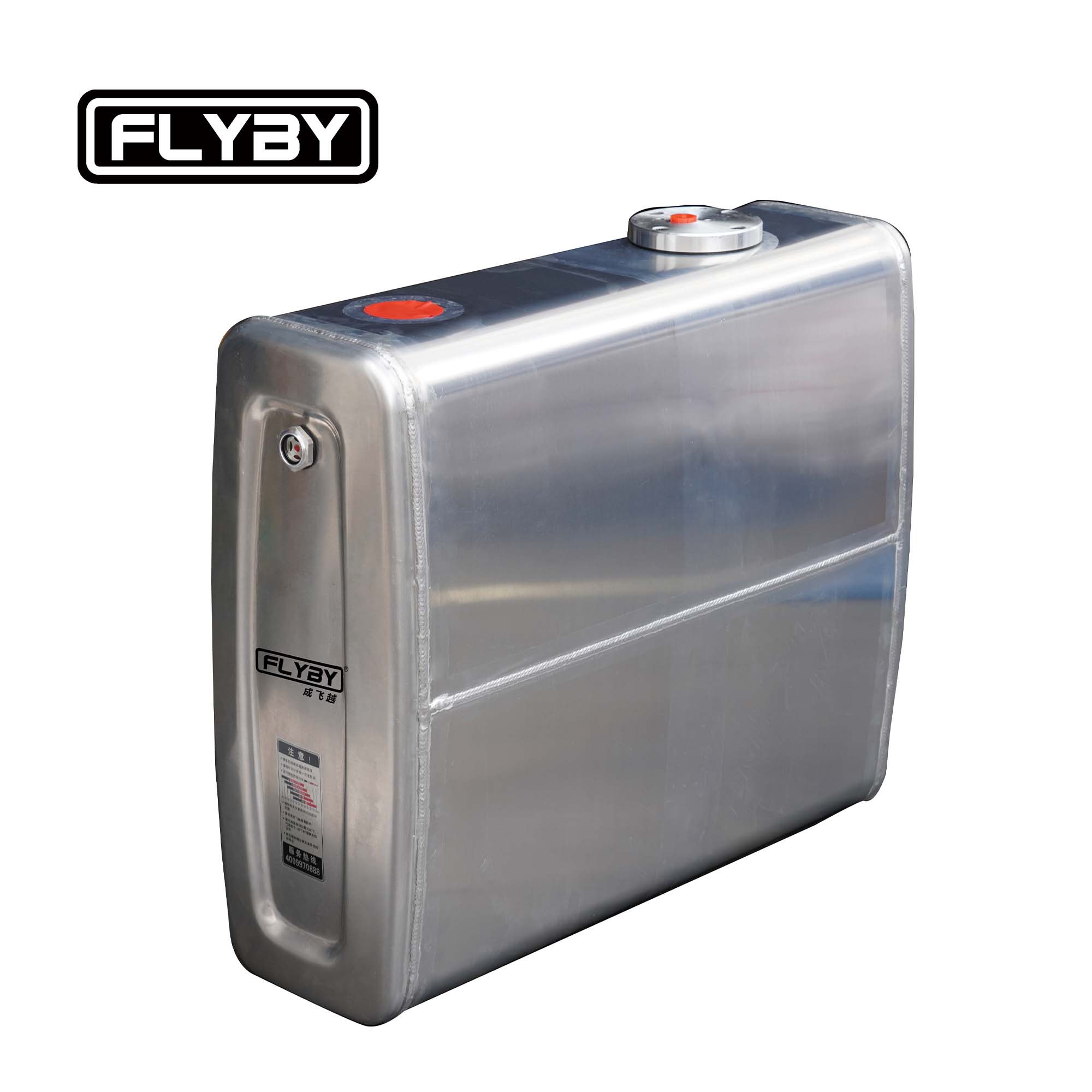
Aluminum is widely used when weight savings and thermal performance matter, particularly for truck hydraulic tank applications and mobile equipment.
Advantages:
Weighs significantly less than steel — ideal for mobile applications where payload and fuel economy matter.
Excellent corrosion resistance due to natural oxide layer.
Superior heat dissipation improves passive oil cooling.
Strong enough for heavy-duty operations without excessive weight increase.
Limitations:
Material cost is higher than steel.
Fatigue of welds in high vibration can occur if not properly isolated.
Ideal for hydraulic oil tank applications on trucks, trailers, and road construction equipment where weight savings and heat control are important.
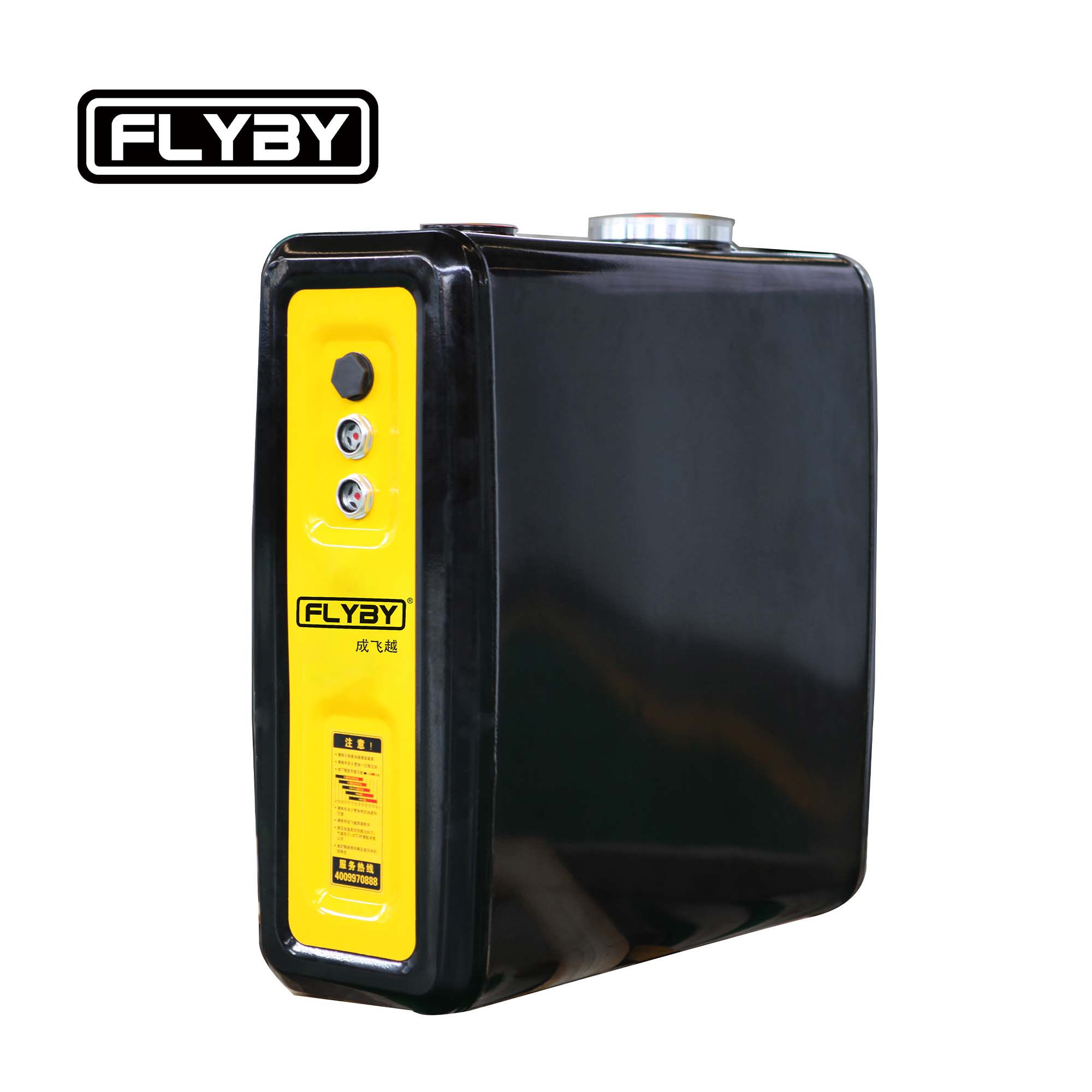
Steel is the most traditional material for hydraulic oil tanks, found in many industrial and heavy‑duty installations.
Advantages:
High strength and durability for demanding environments.
Excellent heat dissipation due to good conductivity.
Easier to repair or modify using standard welding tools.
Limitations:
Heavier weight can be a drawback for mobile equipment.
Susceptible to corrosion if moisture forms inside.
May require interior coating or rust mitigation.
Best suited for stationary industrial hydraulic power units, manufacturing and heavy machinery with less emphasis on weight.
Material | Weight | Corrosion Resistance | Heat Dissipation | Cost | Best Use Case |
|---|---|---|---|---|---|
Plastic Hydraulic Oil Tank | ⭐️⭐️⭐️ | ⭐️⭐️⭐️⭐️ | ⭐️ | ⭐️⭐️⭐️ | Compact mobile units, external cooling systems |
Aluminum Hydraulic Oil Tank | ⭐️⭐️⭐️⭐️ | ⭐️⭐️⭐️⭐️ | ⭐️⭐️⭐️ | ⭐️⭐️ | Truck hydraulic systems, mixers, trailers |
Steel Hydraulic Oil Tank | ⭐️⭐️ | ⭐️⭐️⭐️ | ⭐️⭐️⭐️⭐️ | ⭐️⭐️⭐️ | Industrial equipment, stationary pumps |
Rating scale out of 5 stars (⭐️)
For mobile hydraulic systems on trucks or trailers: An Aluminum Hydraulic Oil Tank often strikes the best balance of weight, corrosion resistance, and cooling performance — ideal for truck hydraulic tank installations where every pound matters.
For high‑heat environments or heavy industrial use: A Steel Hydraulic Oil Tank remains a reliable choice due to its structural strength and good heat dissipation.
For compact power packs or budget installations: A Plastic Hydraulic Oil Tank can be an excellent cost and weight‑saving solution — but plan for added cooling if your system generates significant heat.
Every Hydraulic Oil Tank serves as a reservoir, heat exchanger, and contaminant settler in a hydraulic circuit. The right material enhances performance and longevity while matching your mechanical, environmental, and cost requirements.
1. Which hydraulic oil tank material is best for road‑use truck systems?
Aluminum tanks combine lightweight design with corrosion resistance — making them ideal for truck hydraulic tank applications where cooling and weight savings matter most.
2. Do steel tanks require additional protection against rust?
Yes, steel tanks should be coated or painted to reduce internal and external corrosion, especially if moisture or condensation is expected.
3. Can a plastic hydraulic oil tank handle high‑temperature fluid?
Plastic tanks lack thermal conductivity, so without external cooling they may not dissipate heat well in high‑temperature circuits.
4. Is aluminum more expensive than steel?
Aluminum generally costs more than steel, but its advantages in weight and heat performance often justify the price in mobile systems.
5. Can mixing tank materials cause issues?
Using different materials in a hydraulic system is fine, but ensure fittings, coatings, and maintenance practices consider corrosion and thermal expansion differences among metals.