Views: 0 Author: Site Editor Publish Time: 2026-09-10 Origin: Site
Erratic, sluggish, or stalled dump body lifts under heavy loads directly impact cycle times and operational safety. You rely on smooth operation to keep job sites moving efficiently. Bouncing cylinders and mid-air stalls create dangerous situations for operators and ground crews alike. While system pressure determines your ultimate lifting force, flow rate dictates lift speed, responsiveness, and descent control. We measure this vital flow rate in Gallons Per Minute (GPM). Proper flow ensures the cylinder extends at a predictable, steady pace without starving the system.
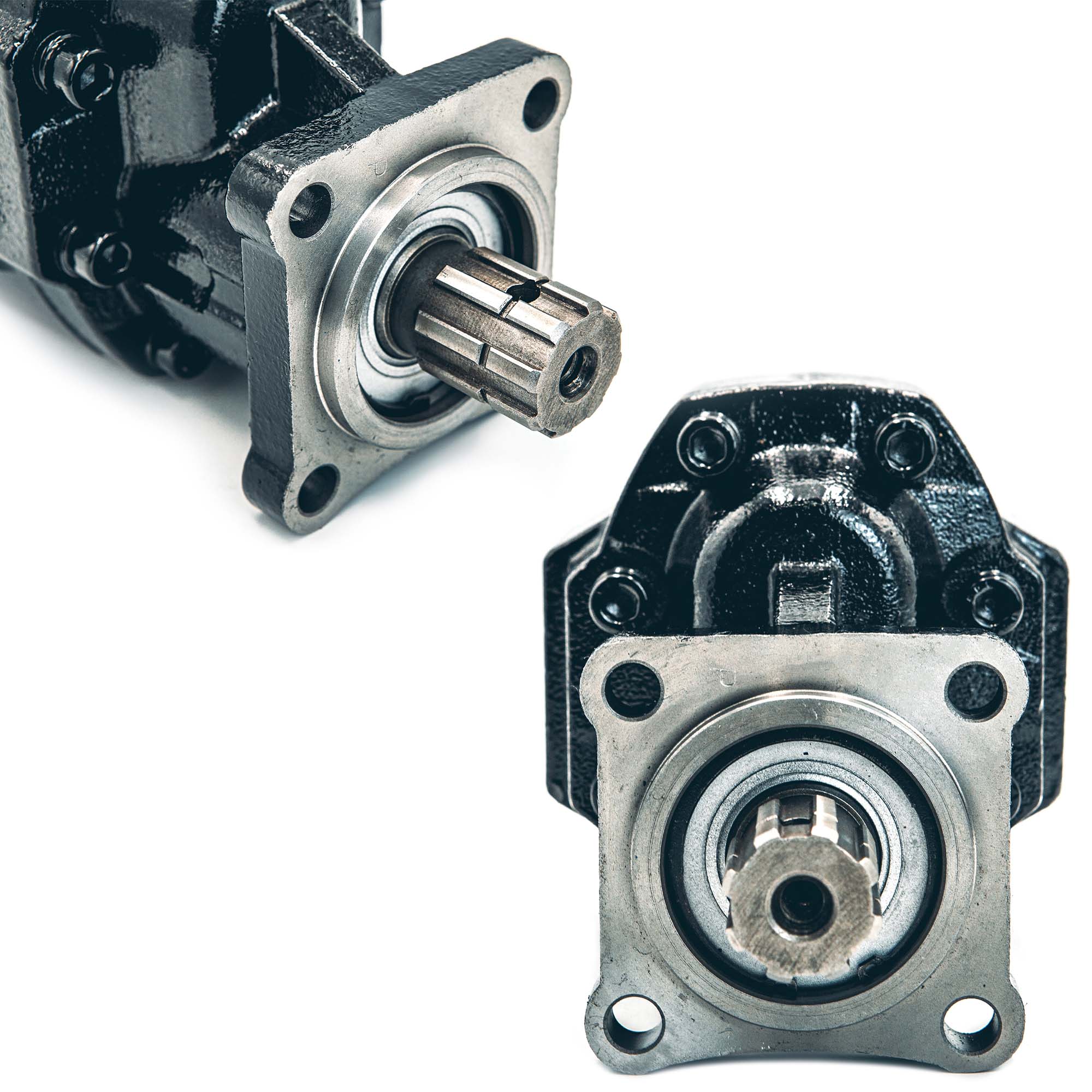
For fleet managers and owner-operators experiencing degraded hoist performance, upgrading or properly matching your Hydraulic Pump to your system's flow requirements is the most direct path to restoring precise lift control. This guide breaks down how you can evaluate pump flow capabilities for your specific commercial application. You will discover exactly how to diagnose flow issues, compare technologies, and execute a safe, highly effective hydraulic system upgrade.
Flow vs. Pressure: Flow (GPM) controls the speed and stability of the dump body; Pressure (PSI) provides the brute force to lift the payload.
Pump Selection Matters: Upgrading from a basic setup to a properly sized hydraulic gear pump or hydraulic piston pump eliminates stuttering and mid-lift stalls.
System Compatibility: Increasing flow requires matching PTO torque limits, hydraulic line diameters, and cylinder capacities to prevent overheating or cavitation.
Safety First: Predictable flow prevents sudden drops and ensures smooth max-height limitations, especially critical in scissor hoist configurations.
Field operators often observe clear warning signs before a complete system failure occurs. Your truck bed might raise smoothly when entirely empty. However, it stalls abruptly when fully loaded with gravel or dirt. Jerky cylinder movement represents another common red flag. Slow cycle times ruin daily productivity and frustrate drivers. These specific symptoms usually point directly to fluid delivery problems rather than structural issues.
Inadequate flow creates dangerous air pockets inside the fluid lines. It essentially starves the lifting cylinders of oil. This fluid starvation causes an erratic bouncing motion. You will notice this unstable movement during both the lifting and lowering phases of operation. Optimal stability requires a continuous, unbroken stream of hydraulic oil pushing against the cylinder seals. When flow drops, stability disappears.
Why do existing setups degrade over time? Internal wear remains the most frequent culprit. Worn metal components allow hydraulic fluid to bypass internally instead of pushing out into the lines. Incorrect oil viscosity also severely disrupts proper flow dynamics. Cold winter climates require thinner oil to maintain GPM. Finally, operators sometimes install a mismatched Dump Truck Hydraulic Pump as a cheap, quick replacement. This common mistake cripples overall system performance. A cheap unit rarely meets original factory flow specifications, leaving you with sluggish, unsafe lifting cycles.
How exactly does fluid delivery dictate equipment speed? Cycle times depend entirely on fluid volume entering the lift cylinder. We measure this vital fluid volume in Gallons Per Minute (GPM). You can actually calculate your ideal lift speed mathematically before purchasing new parts. Several mechanical factors combine to establish your total flow rate output.
Determine the total volume of your main lift cylinder in gallons.
Identify the fixed displacement specification of your pump per revolution.
Multiply the displacement by your Power Take-Off (PTO) shaft RPM to find raw GPM.
Divide the total cylinder volume by your GPM to calculate exact extension time.
While achieving faster speeds seems appealing, you must carefully balance speed against operational control. Overspeeding a hydraulic system creates massive safety risks on the job site. Too much flow causes violent top-outs. It forcefully slams the lift cylinder at maximum extension. This violent mechanical action easily compromises the truck's center of gravity. You risk tipping the entire vehicle over during a rapid unload.
To prevent these dangerous scenarios, systems integrate specific valving mechanisms. Directional control valves and pressure relief valves manage the flowing fluid. They ensure smooth metering throughout the entire stroke. This precise valving eliminates an unsafe, all-or-nothing lift profile. It gives the operator granular control over the load position.
Choosing the right technology matters immensely for long-term fleet reliability. Commercial dump trucks and heavy tipping trailers rely primarily on two different architectural designs. We evaluate these options based on structural reliability, initial investment, and precise control capabilities.
Table 1: Hydraulic Pump Architecture Comparison
Feature | Gear Architecture | Piston Architecture |
|---|---|---|
Contamination Tolerance | High (handles dirty fluid well) | Low (requires highly filtered fluid) |
Pressure Efficiency | Drops off at maximum PSI | Maintains efficiency at high PSI |
Flow Control | Fixed (tied directly to RPM) | Variable (independent of RPM) |
Initial Cost | Generally lower | Generally higher |
The traditional gear design remains a proven industry staple. It serves standard dump trucks exceptionally well across various industries. Rugged, dirty environments demand this level of mechanical simplicity. We highly recommend this category for straightforward, budget-conscious fleet upgrades. It provides dependable power day after day.
Pros: It offers a very high tolerance for unavoidable fluid contamination. The durable outer casing withstands severe environmental abuse. You get predictable, fixed displacement performance every time you engage the PTO. Mechanics find them incredibly easy to troubleshoot and replace.
Cons: Volumetric efficiency drops significantly at maximum operating pressures. The output flow rate remains strictly tied to engine RPM. You cannot vary the fluid flow independently. We suggest a Hydraulic Gear Pump for heavy-duty hauling operations where variable speed metering is entirely unnecessary.
Some applications demand much tighter operational parameters. Heavy-duty commercial applications often require extreme pressure and variable flow. Spreading asphalt or dropping gravel evenly over a long distance demands precise metering. You need exact control over the bed angle.
Pros: This complex design delivers exceptional mechanical efficiency. It handles extremely high PSI loads without suffering any flow degradation. It allows for variable displacement functionality. You can easily control fluid flow independently of your main engine RPM.
Cons: It requires a significantly higher initial financial investment. The extremely tight internal tolerances make it highly sensitive to oil contamination. Even tiny metal shavings can destroy the internal block. Despite these maintenance factors, a Hydraulic Piston Pump delivers truly unmatched control for highly specialized, professional operations.
Upgrading requires careful technical evaluation and system planning. You cannot simply bolt on a larger unit and expect perfect results. We highly recommend using a strict technical checklist before purchasing any major upgrade. Missing a single specification can lead to disastrous field failures.
Target Cycle Time: Calculate your required GPM strictly based on cylinder volume. Match this calculation to your desired lift speed. For example, targeting a fast 15-second lift requires specific flow math to ensure you buy the right displacement size.
PTO Compatibility: Your transmission's Power Take-Off mechanism must handle the new mechanical load. Verify it thoroughly supports the continuous torque required by a higher-flow unit. Excessive torque shears PTO shafts instantly.
Port and Hose Sizing: Avoid the dangerous fluid bottleneck effect. Installing a high-flow unit alongside undersized hoses generates extreme internal heat. This aggressive thermal mismatch leads to rapid hose degradation and ultimate system failure.
Operating Environment: Always factor in your daily duty cycle. Assess the frequency of heavy lifts per day. Consider local climate variations affecting oil viscosity. Continuous heavy lifting in hot climates requires larger fluid reservoirs to dissipate heat effectively.
Post-installation issues occur frequently without proper setup procedures. Upgrading your flow necessitates recalibrating maximum pressure relief valves immediately. You must set these valves correctly to prevent catastrophic hardware failures. Pushing too much flow without proper pressure relief simply blows hydraulic hoses under heavy loads. It also ruins expensive cylinder seals permanently.
Managing fluid cavitation is your next major priority. Cavitation literally starves the internal gears or pistons of necessary lubricating oil. This destructive phenomenon occurs when you move to a higher GPM without upgrading the fluid reservoir. A small reservoir simply cannot feed a large intake fast enough. Blocked suction lines also trigger this exact same destructive phenomenon. Listen closely for a distinct, high-pitched whining noise. It indicates microscopic air bubbles violently collapsing under high pressure.
Finally, carefully address your maximum raise adjustments. Physical limitation settings require highly precise recalibration. Scissor hoists utilize heavy limit cables to stop the lift safely. Ensure the new, faster flow rate doesn't override these vital mechanical safety stops. Sudden stops at excessive speeds will snap limit cables instantly, causing the heavy bed to flip backward.
Achieving optimal dump body lift control requires striking a delicate balance. You must match the right GPM for efficient speed against the correct PSI for heavy load capacity. Upgrading your fluid delivery system transforms a sluggish, unpredictable truck into a highly productive asset.
We advise buyers to avoid over-speccing a system just to achieve slightly faster cycle times. Speed without control creates dangerous instability. Choose a gear architecture for rugged reliability in standard applications. Opt for a piston architecture only when precision fluid metering is absolutely non-negotiable for your specific contracts.
Before purchasing replacement parts, measure your current cylinder dimensions accurately. Check your transmission PTO torque ratings carefully. We encourage you to consult with a certified hydraulic engineer or contact our sales team to get a perfectly matched, safe recommendation.
A: This symptom points to excessive internal wear in your pump. The worn internal components allow fluid to bypass internally under heavy pressure. Alternatively, your main relief valve might trigger too early. It is fundamentally a pressure and flow retention issue, not merely a payload weight problem.
A: Yes, but you must proceed with significant caution. You must verify your PTO, hydraulic hoses, fluid reservoir, and lift cylinder can actively handle the increased flow. Ignoring these supporting components causes rapid fluid overheating, severe pump cavitation, and catastrophic system failure.
A: Lowering speed relies primarily on gravity pushing fluid back into the reservoir. Therefore, the pump itself does not control the descent. You generally control this speed using an inline flow restrictor. The metering capability of your directional control valve also safely regulates this downward movement.